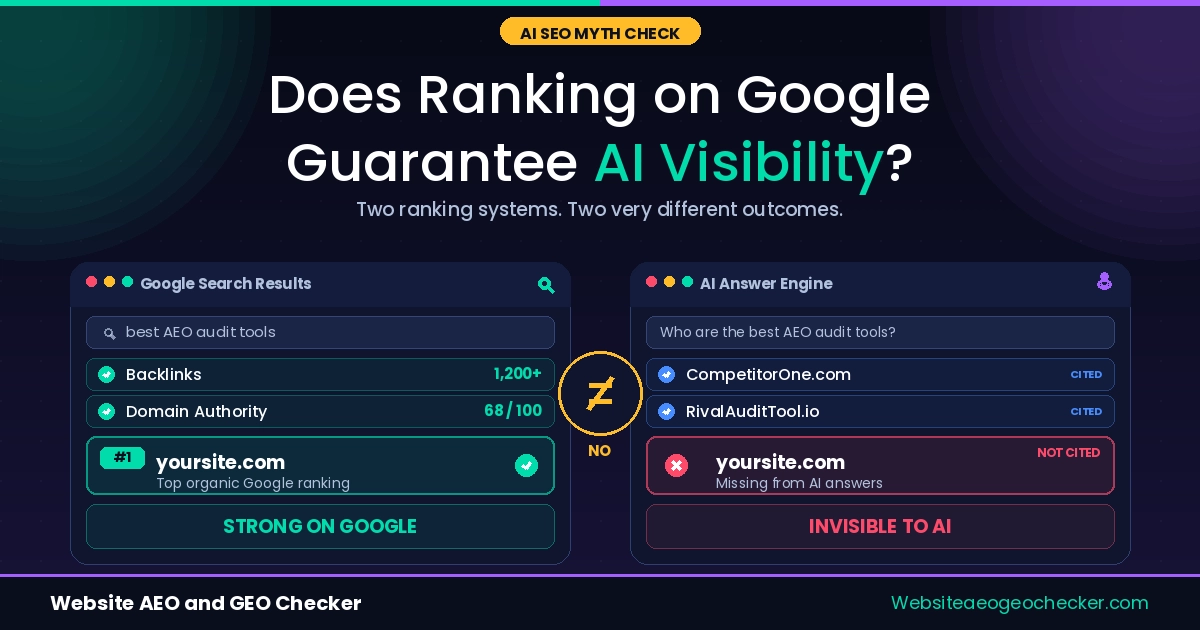
Your page ranks on page one. Traffic is decent. But when someone asks ChatGPT or Perplexity a question your content answers perfectly, another site gets cited. Not yours.
This is less a quality problem and more a formatting problem. AI doesn't read your page. It scans, searching for a standalone quote near the beginning. AI will skip to the next source if it doesn't quickly find what it's looking for. Your post, which is comprehensive and well researched, is likely to get skipped by AI. A competitor's post, which is direct and to the point, is likely to get referenced.
This guide explains the answer-first format in full: what it is, how to write an opening paragraph that works as a direct answer, how to structure every section that follows, and how to reformat your existing content without rewriting it from scratch. If you want to check how your current pages score before and after, run them through the Website AEO Checker for a full breakdown.
What Answer-First Actually Means
Answer-first is not a writing style. It is a structural commitment.
So, the answer to the main question your page addresses needs to be included in the first paragraph of your page. No context from the rest of the article needs to be included. The answer is composed of two to three sentences, and it is straightforward and direct. No fluff. The answer to the question is clearly stated.
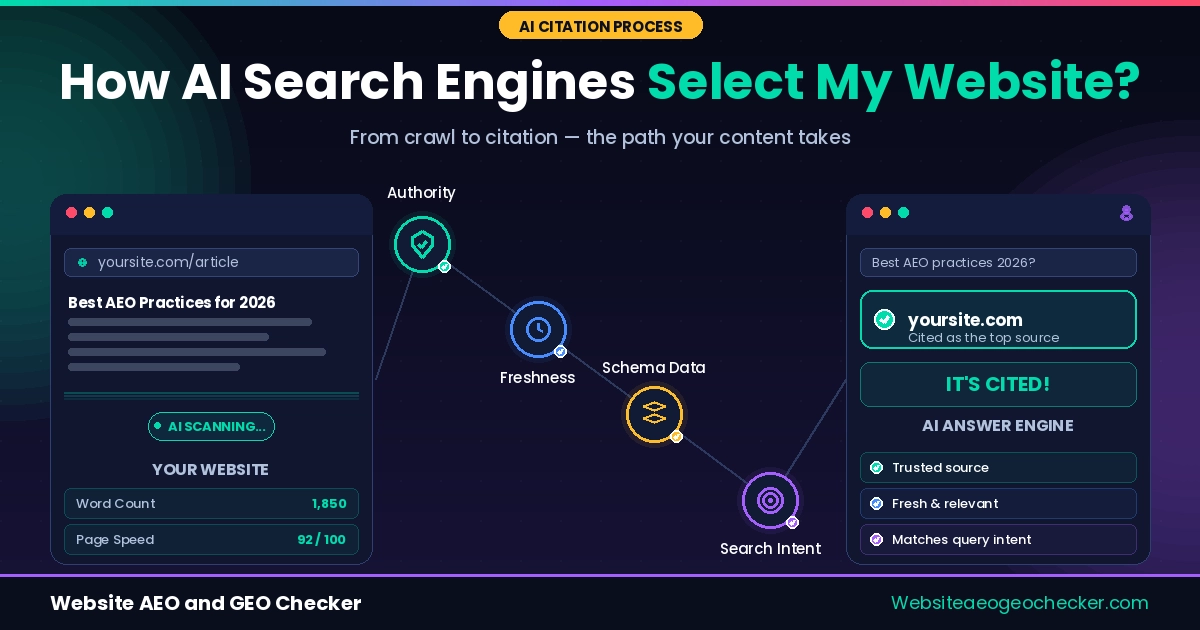
This matters because of how AI engines work. Google AI Overviews, Perplexity, and ChatGPT all extract content from web pages by scanning for passages that can be lifted and used directly in a response. Google's own guidance on AI features confirms that the same principles driving good search content apply to AI citation: be clear, be structured, make the content easy for systems to parse. AI systems do not summarise your whole page. They find the passage that best answers the query and pull it. If that passage is buried on line 400, it often does not get found at all.
To understand why this is different from standard SEO, read our breakdown of how AI answer engines rank content. The ranking signals are not the same as Google's.
How to Write an Answer-First Opening Paragraph
Start with the core question your page is meant to answer. Not a version of it. The exact question.
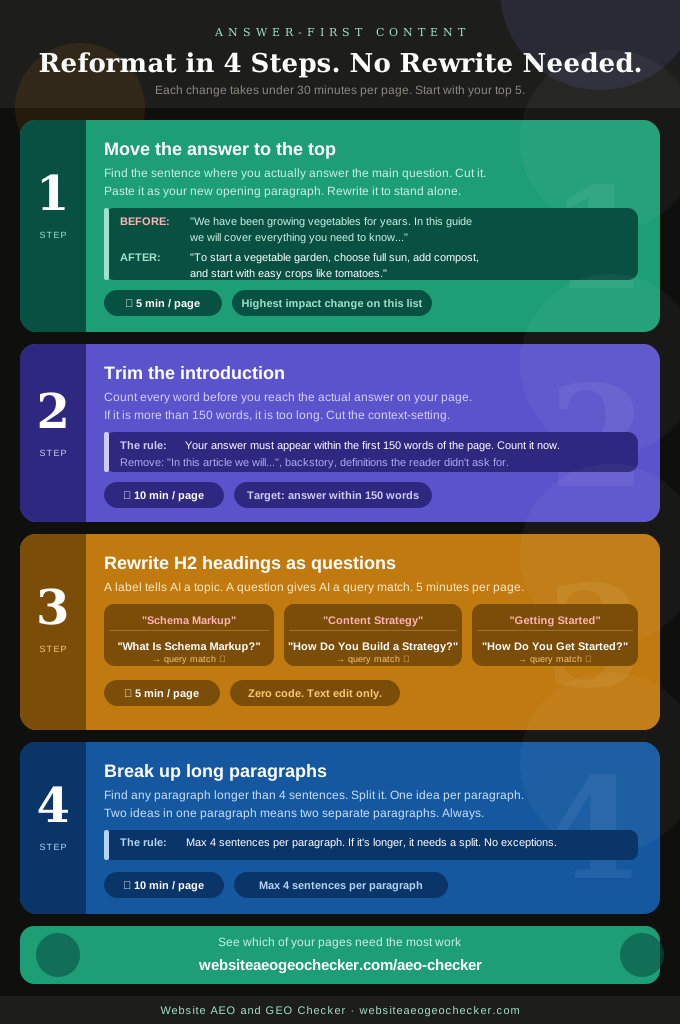
Then write a direct answer to it in two to three sentences. That is your opening paragraph. Every word in it should serve the answer. No lead-in, no context-setting, no "great question." Just the answer.
Here is what this looks like in practice.
Before (standard SEO intro): "Schema markup has become an increasingly important part of modern SEO strategy. As search engines become more sophisticated, the way you structure your content matters more than ever. In this guide, we will walk you through everything you need to know about schema markup and why it matters for your website."
After (answer-first format): "Schema markup is structured data added to your webpage's HTML that tells search engines and AI systems what your content means, not just what it says. It uses a standardised vocabulary from Schema.org to identify things like articles, FAQs, organisations, and products. Adding it helps AI engines cite your content accurately because they can understand the context without reading the whole page."
The second answer gives a clear and complete response to the question in its first paragraph. It stands alone, is under 100 words, and is easy for AI to use.
After the opening paragraph, you can add context, background, and elaboration. The intro does not have to be short overall. It just has to lead with the answer.
How to Structure the Rest of the Page
Answer-first is not just an intro technique. It applies to every section of the page.
To start every section under an H2 heading, provide a two or three-sentence answer to the specific question posed by the heading. Then give more detail by expanding the section, providing examples, and discussing more complex situations. Each section should instantly convey its point without prior context, and this idea aligns with Google's description of content that is easily decipherable by AI.
For paragraphs, the main goal should still be to convey one idea per paragraph, but maintaining a maximum of only four sentences is extremely helpful for readability and composability, both for humans and for AI.
Heading structure is the skeleton AI engines use to understand what each section covers. A heading like "Schema Markup" gives no signal. "What Is Schema Markup and Why Does AI Use It?" tells the engine exactly what the section answers. Structured data and heading signals work together to make your content readable by machines. Fix one without the other and you leave points on the table.
Lists and numbered steps get extracted more consistently than flowing prose. Research consistently shows that between 40 and 61 percent of AI Overviews include bullet points or step-by-step instructions. If your content explains a process, use numbered steps. If it compares options, use a table. Format is not decoration. It is a citation signal.
Real example: James, a freelance financial writer, had a personal finance blog with consistent Google traffic and solid rankings. None of his posts appeared in Perplexity or ChatGPT answers despite covering common money questions, like budgeting & emergency funds. He reformatted three posts: rewrote each H2 as a question, added a two-sentence direct answer at the top of every section, and broke up any paragraph longer than 4 sentences. Within 5 weeks, two of those posts started appearing in Perplexity citations for budgeting questions. The content was the same. The format was different.
The Difference Between Google Content and AI-Citation Content
Google generally rewards the utilization of key phrases, appropriate backlinking, and optimal domain authority, even if the answer is buried on the page. Hundreds of hidden signals that Google assesses all play a role on any given page, like content quality, page rank, link authority, and even the overall construction of the page.
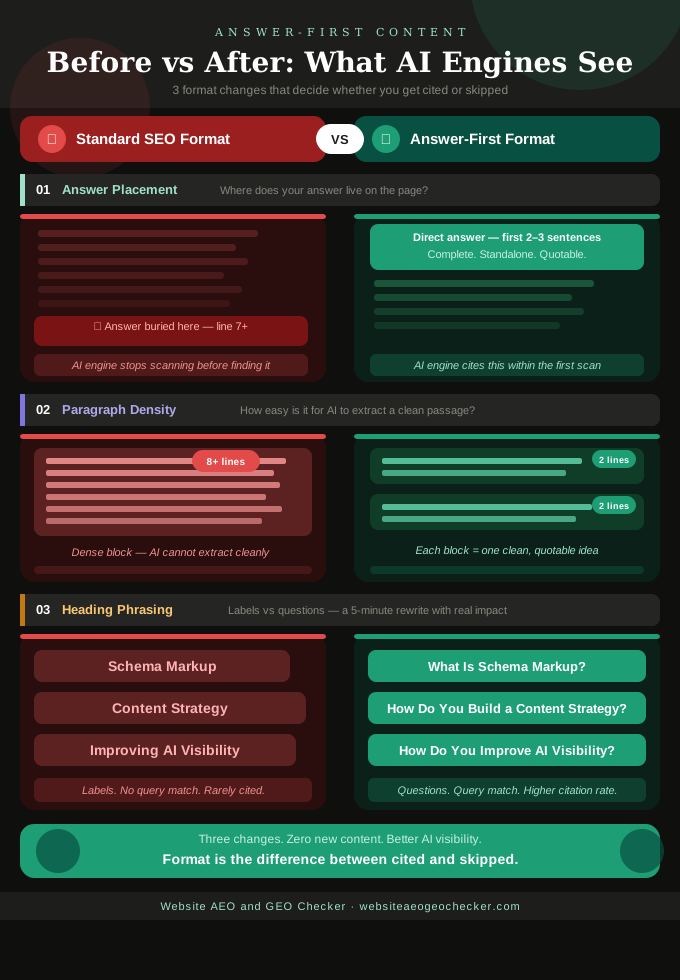
AI citation engines are less forgiving. If your answer is not easily found near the top of the relevant section, the engine will simply move on. The three specific differences are:
Answer placement. A page answering the question at line 300 may rank very high on Google. However, for Perplexity and ChatGPT, a page that provides the answer within the first 100 words or first few sentences of the relevant section is considered a good reference.
Paragraph density. Google handles long prose. AI engines prefer short, clean paragraphs that can be lifted without needing surrounding sentences for context. A dense paragraph might rank fine. It rarely gets quoted.
Heading phrasing. A flat heading like "Content Strategy" gives a search engine a keyword signal. A question heading like "What Content Strategy Works Best for AI Search?" gives an AI engine a query match. The second type is cited more often, because it mirrors the way users ask questions.
Before/after heading example:
Before: "Improving Your Website for AI" After: "How Do You Improve Your Website for AI Search?"
The content under both headings could be identical. The second heading is more likely to trigger a citation because it matches question-format queries directly.
For a broader comparison of how AEO differs from traditional SEO, our post on AEO vs SEO vs GEO covers the full picture.